Ensuring fuel quality and product integrity at every stage.
We safeguard aviation fuel quality throughout storage and transfer operations, ensuring a safe, reliable, and efficient fuel supply while supporting the aviation industry’s transition toward a more sustainable future.
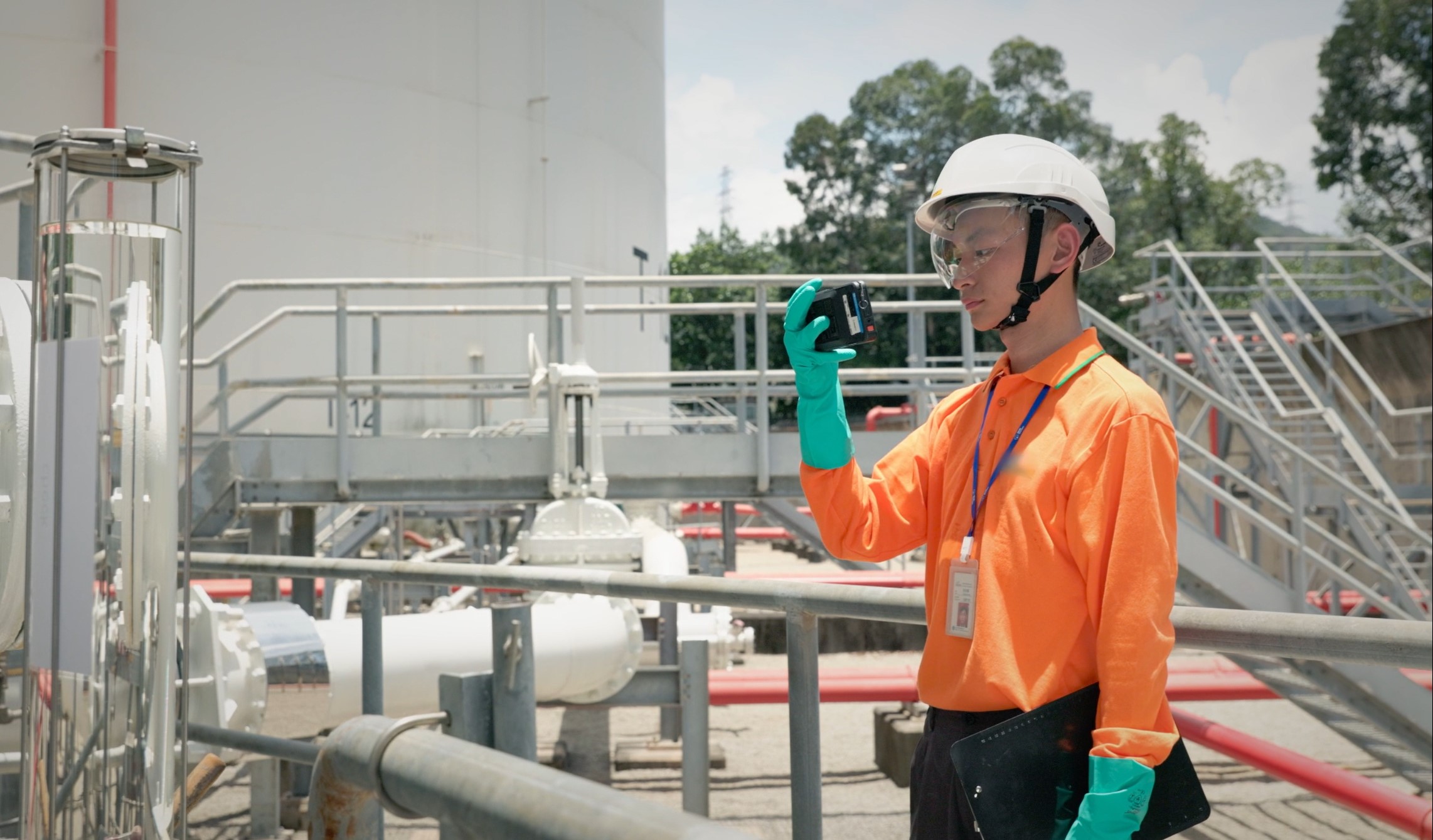
Visual Appearance Check
Fuel samples are visually inspected to confirm they are clear, bright, and free from visible water and contaminants, helping ensure the highest standards of fuel quality.
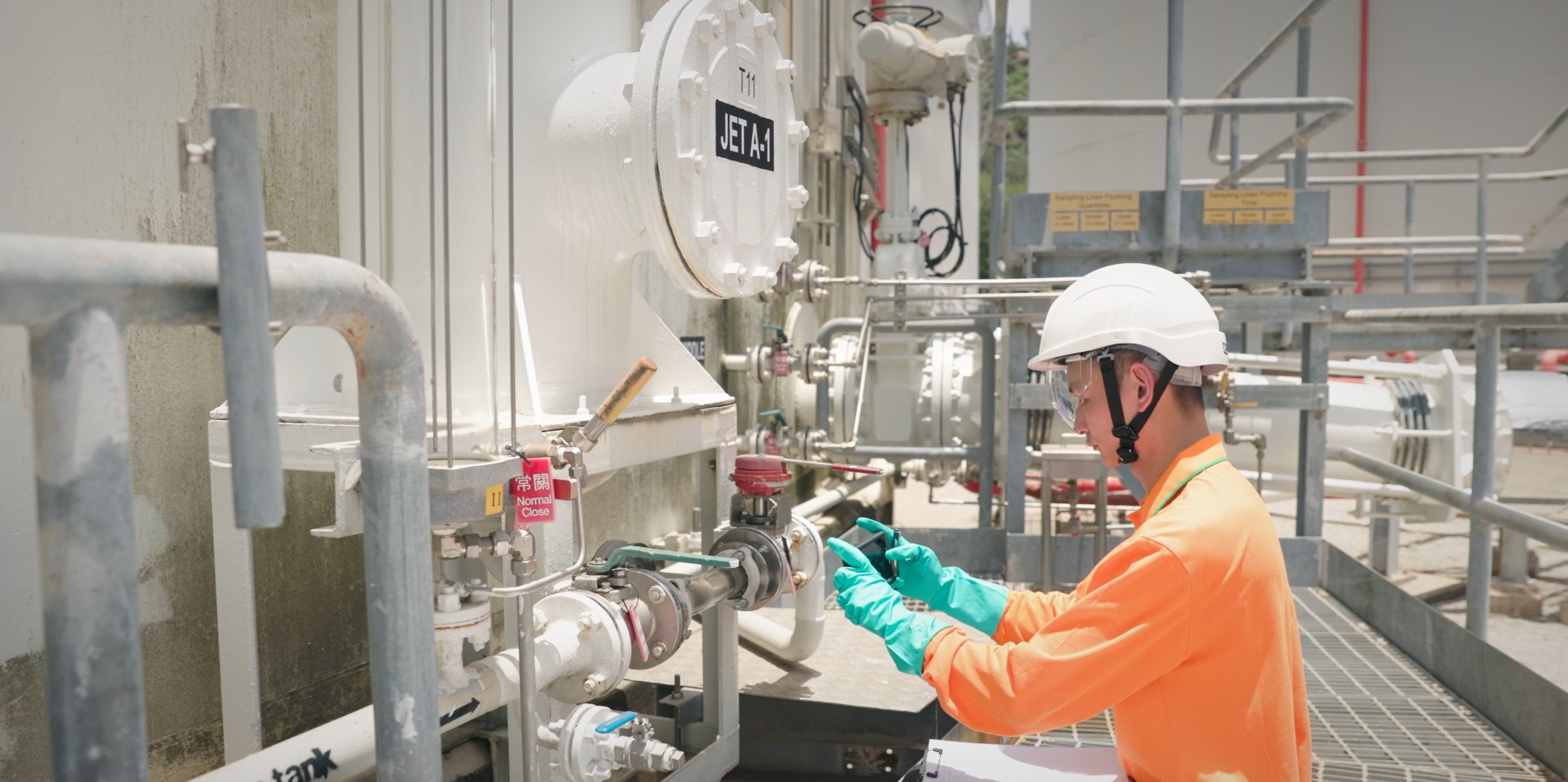
Settling and Draining
Fuel is carefully monitored and conditioned to remove water and impurities before distribution, ensuring a safe and reliable fuel supply for airport operations.
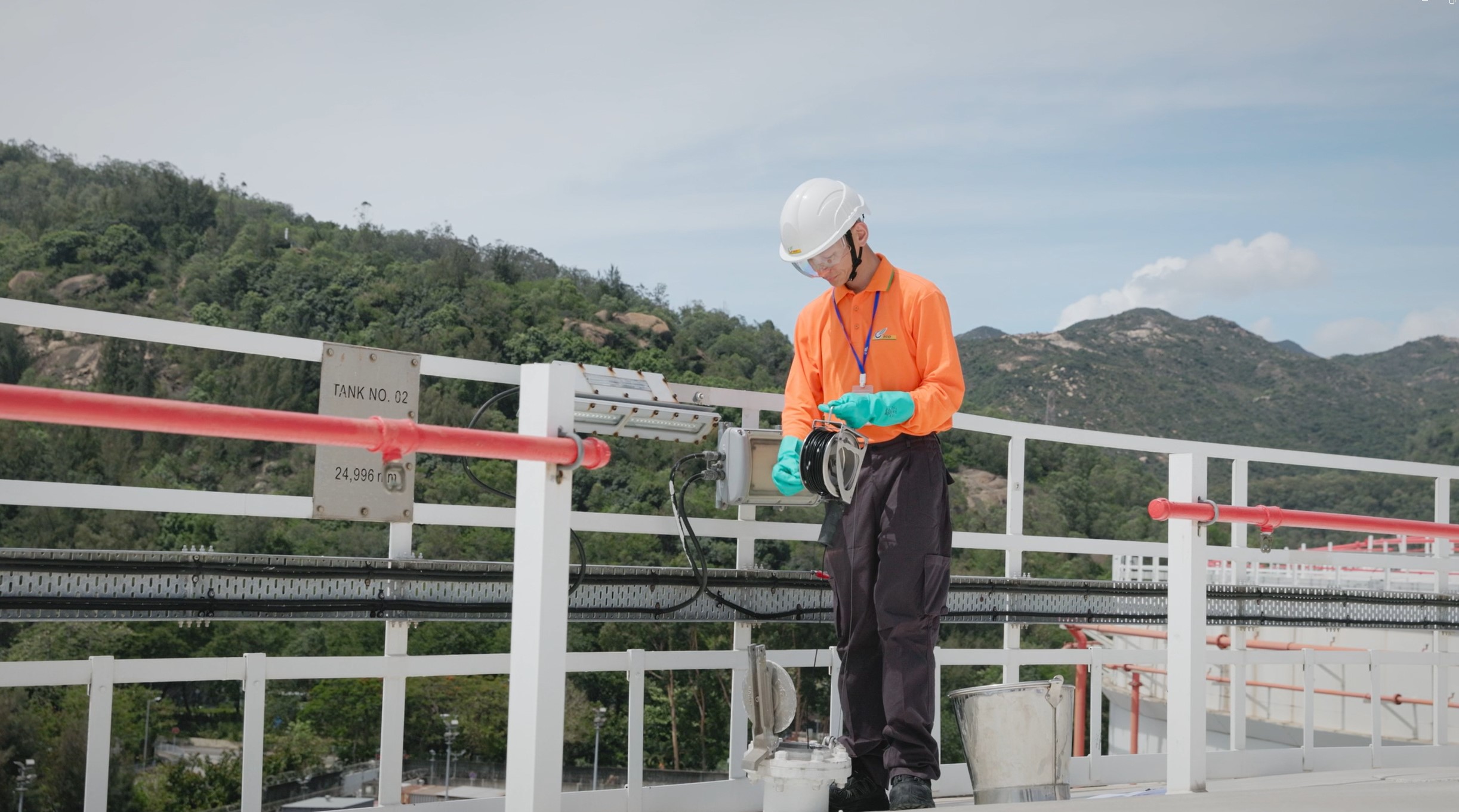
Tank Gauging
Tank levels are routinely measured and verified to maintain accurate fuel inventory records and support the safe and efficient operation of the facility.
Marine Receipt
Where every delivery of aviation fuel begins its journey to HKIA.
Marine receipt operations form the first step in the aviation fuel supply chain, ensuring fuel delivered by tanker vessels is safely transferred and prepared for storage, quality assurance, and eventual delivery to aircraft at Hong Kong International Airport.
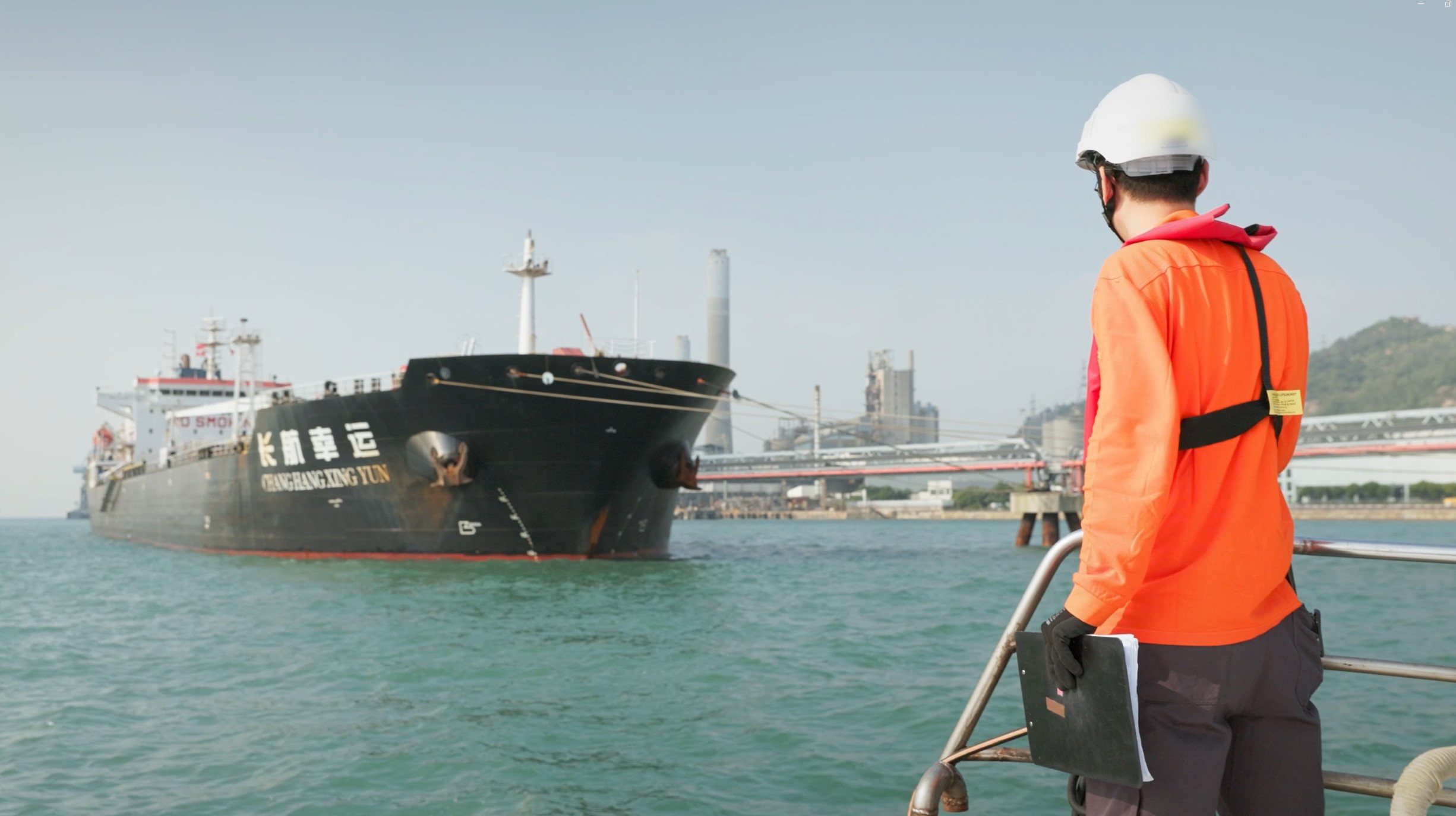
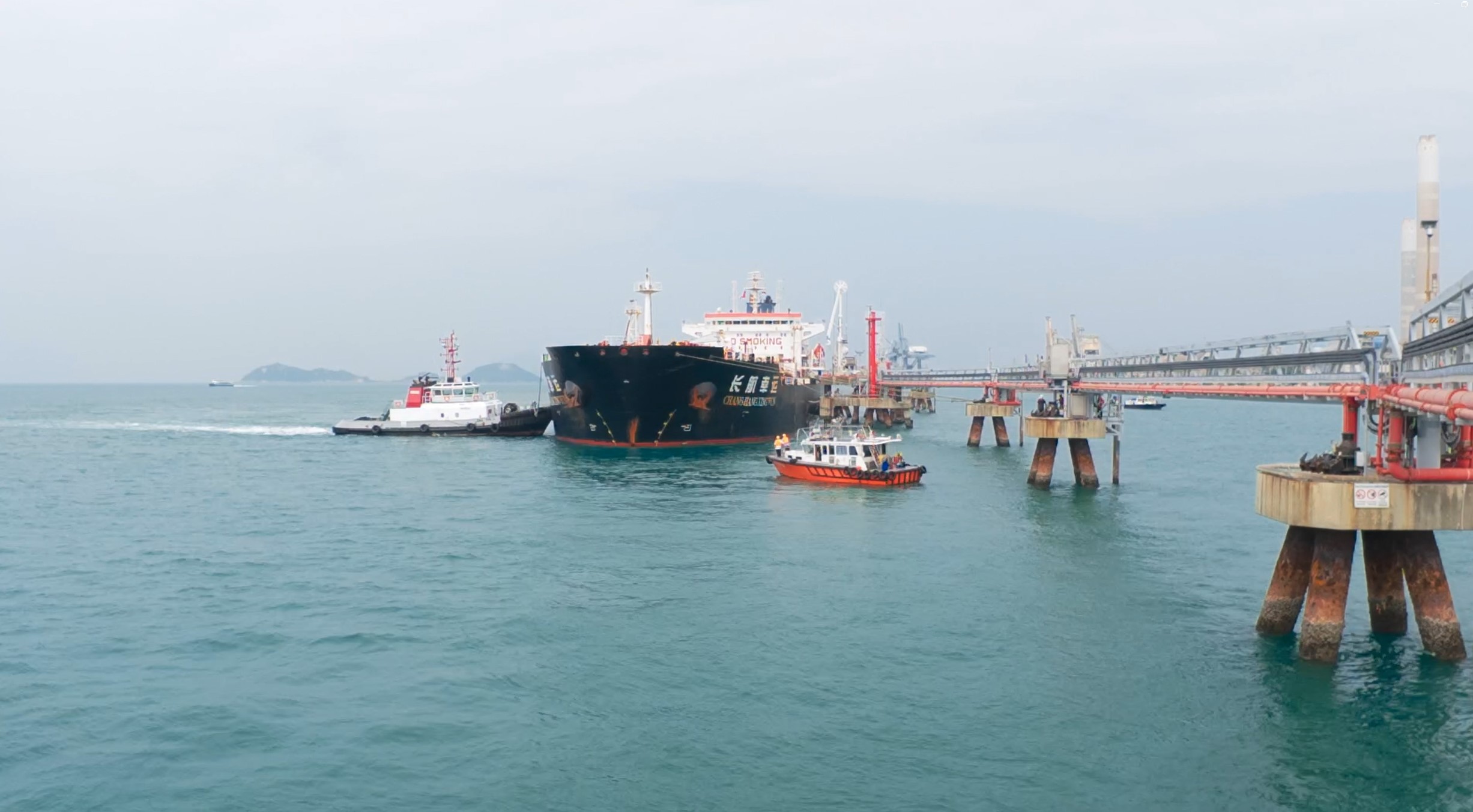
Vessel Berthing
Tanker vessels are guided and moored at the jetty through carefully coordinated marine operations, ensuring safe arrival and preparation for fuel transfer.
Pre-Discharge Inspection
Before fuel transfer begins, the vessel and receiving facilities are inspected to confirm they are ready for safe operations. Fuel samples are collected and tested to verify compliance with international aviation fuel quality requirements.
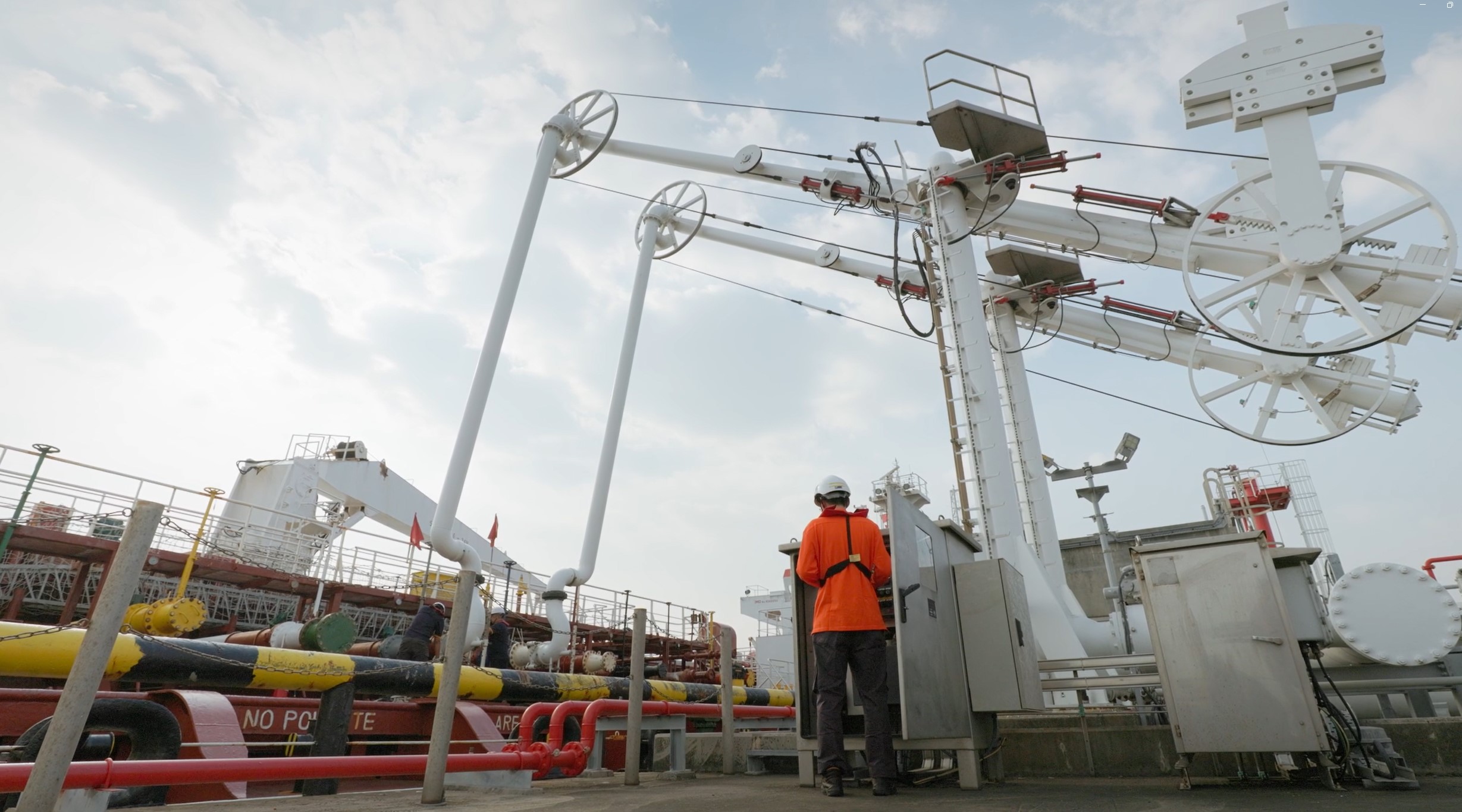
Loading Arms Connection
Specialized marine loading arms are connected to the vessel’s manifold to create a secure transfer path for aviation fuel. Connection integrity is verified before fuel transfer operations begin.
Operational Oversight
Monitoring critical operations and coordinating activities across the facility 24/7.
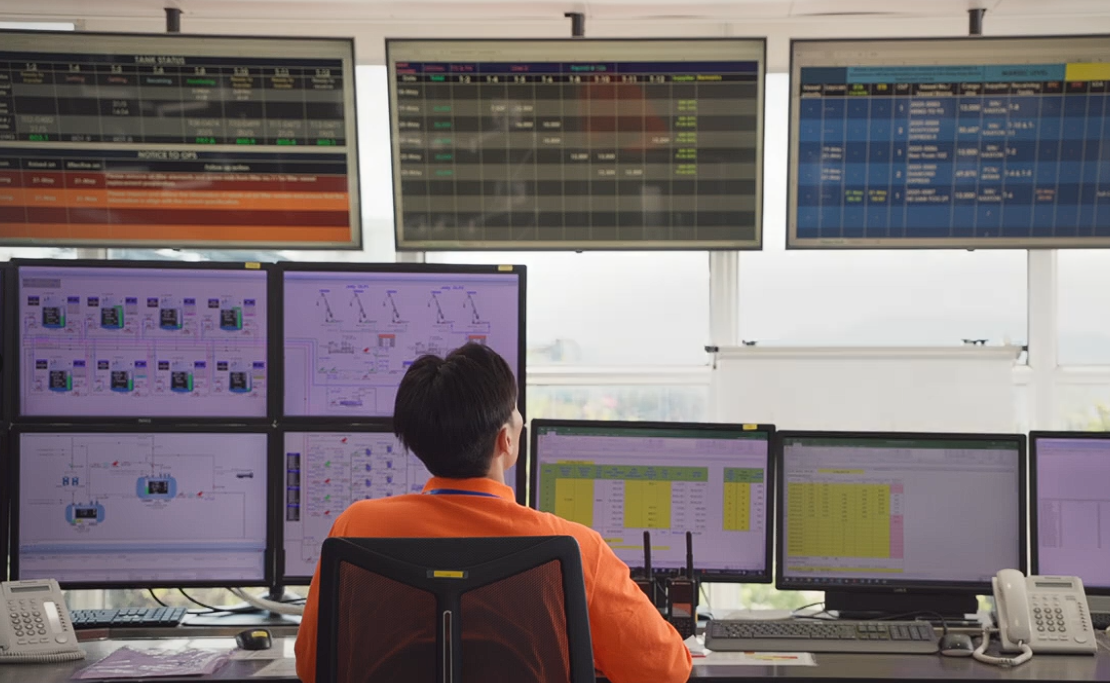
Operating around the clock, we monitor and coordinate every stage of the fuel supply process, ensuring safe, efficient, and reliable operations that support Hong Kong International Airport.
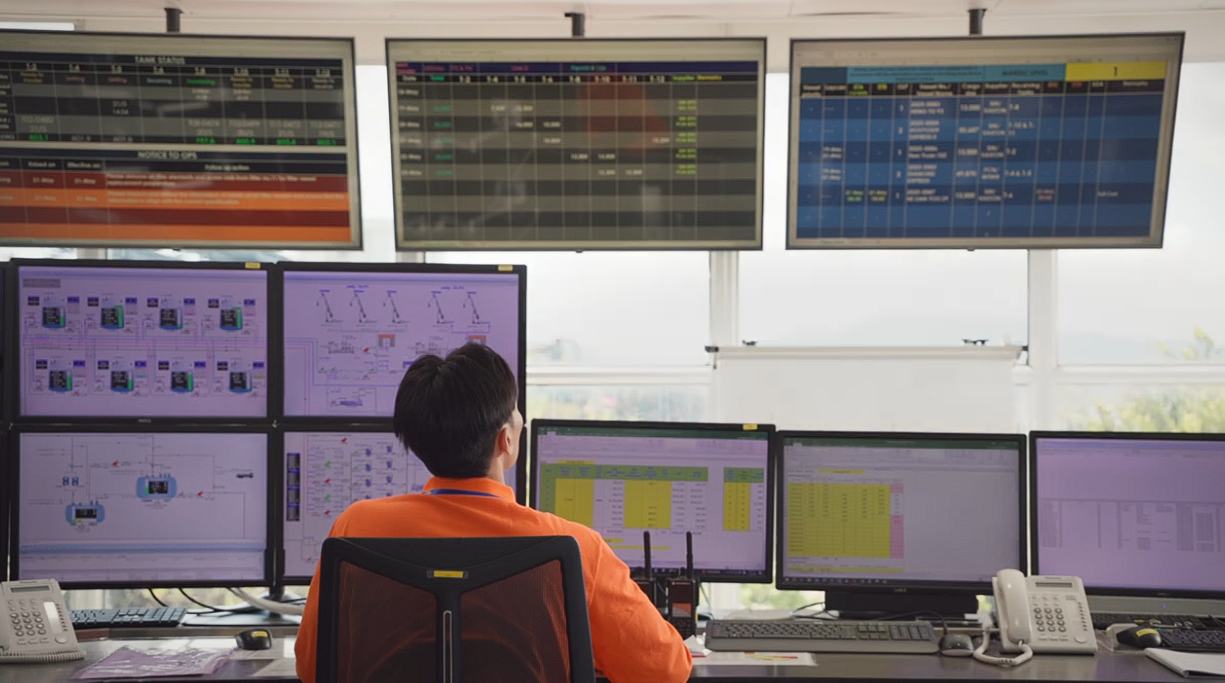
Live Monitoring
Real-time monitoring systems provide continuous visibility of fuel movements and facility operations, helping ensure safe, reliable, and efficient fuel supply to Hong Kong International Airport.
Quality Assurance
Fuel quality records, testing results, and operational documentation are systematically reviewed to ensure compliance with industry standards and support safe fuel supply operations.
Emergency Responses
Emergency situations are managed through established response procedures, ensuring timely coordination, effective decision-making, and the protection of personnel, assets, and operations.
This site is registered on wpml.org as a development site. Switch to a production site key to remove this banner.