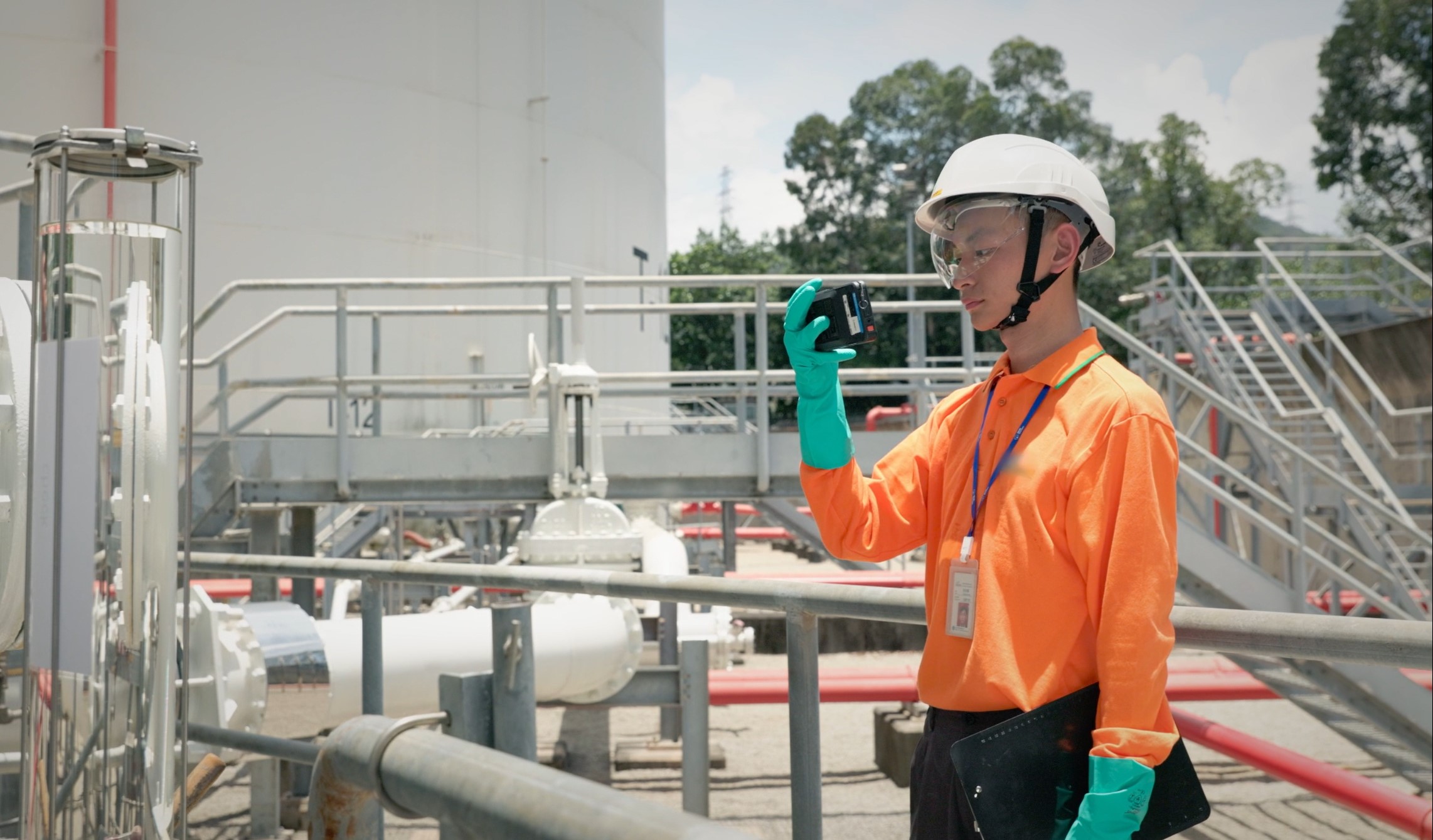
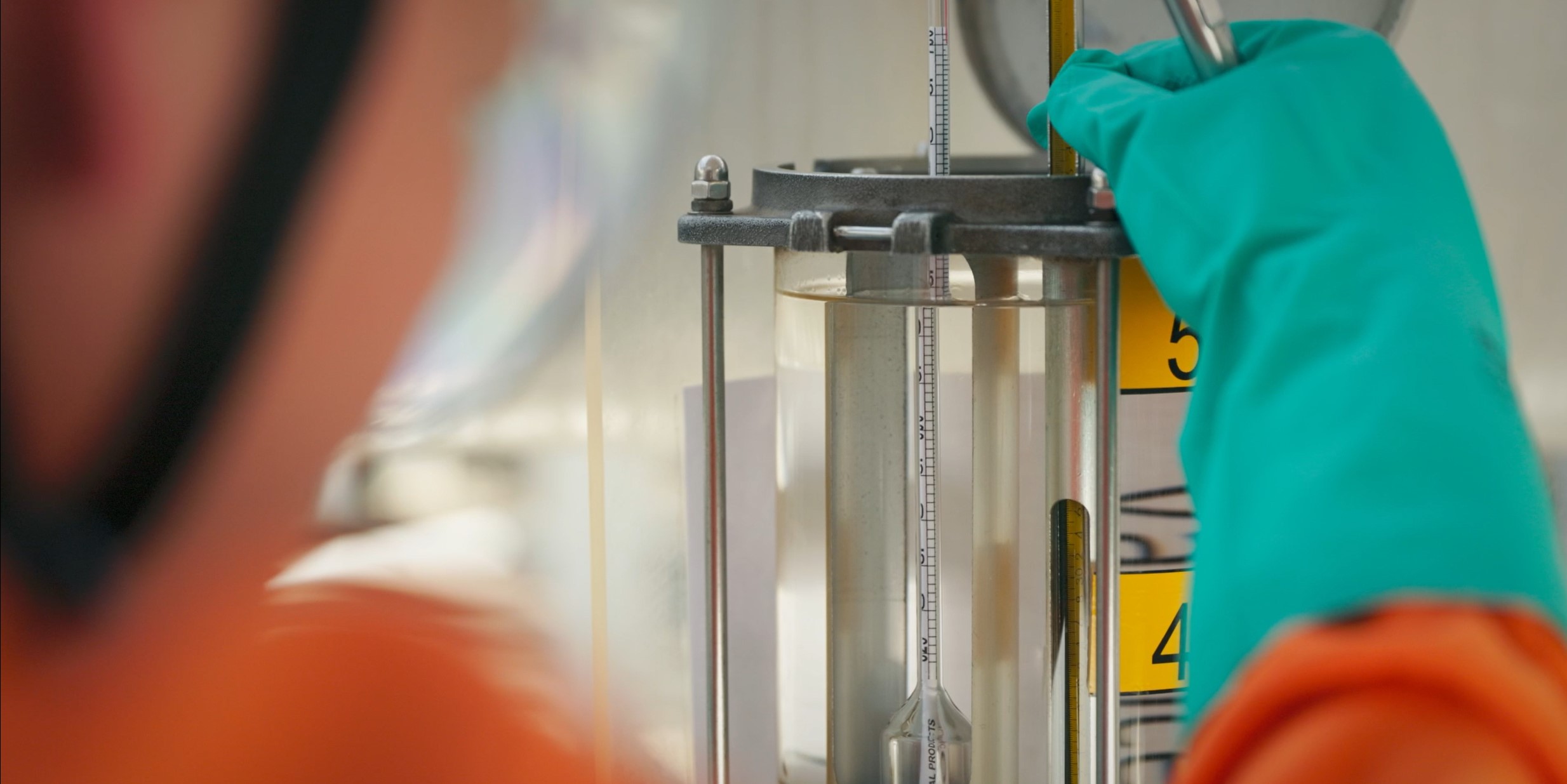
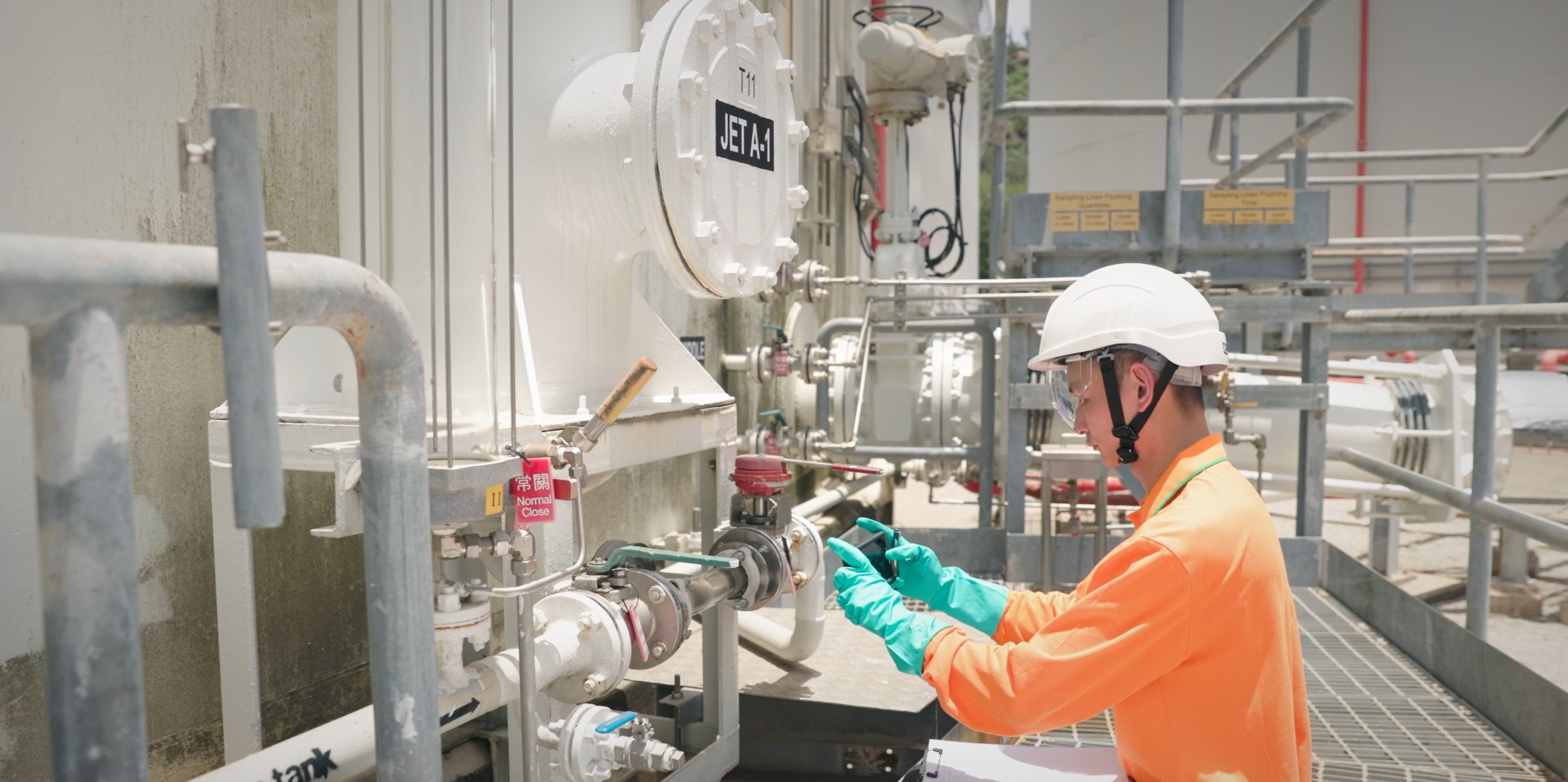
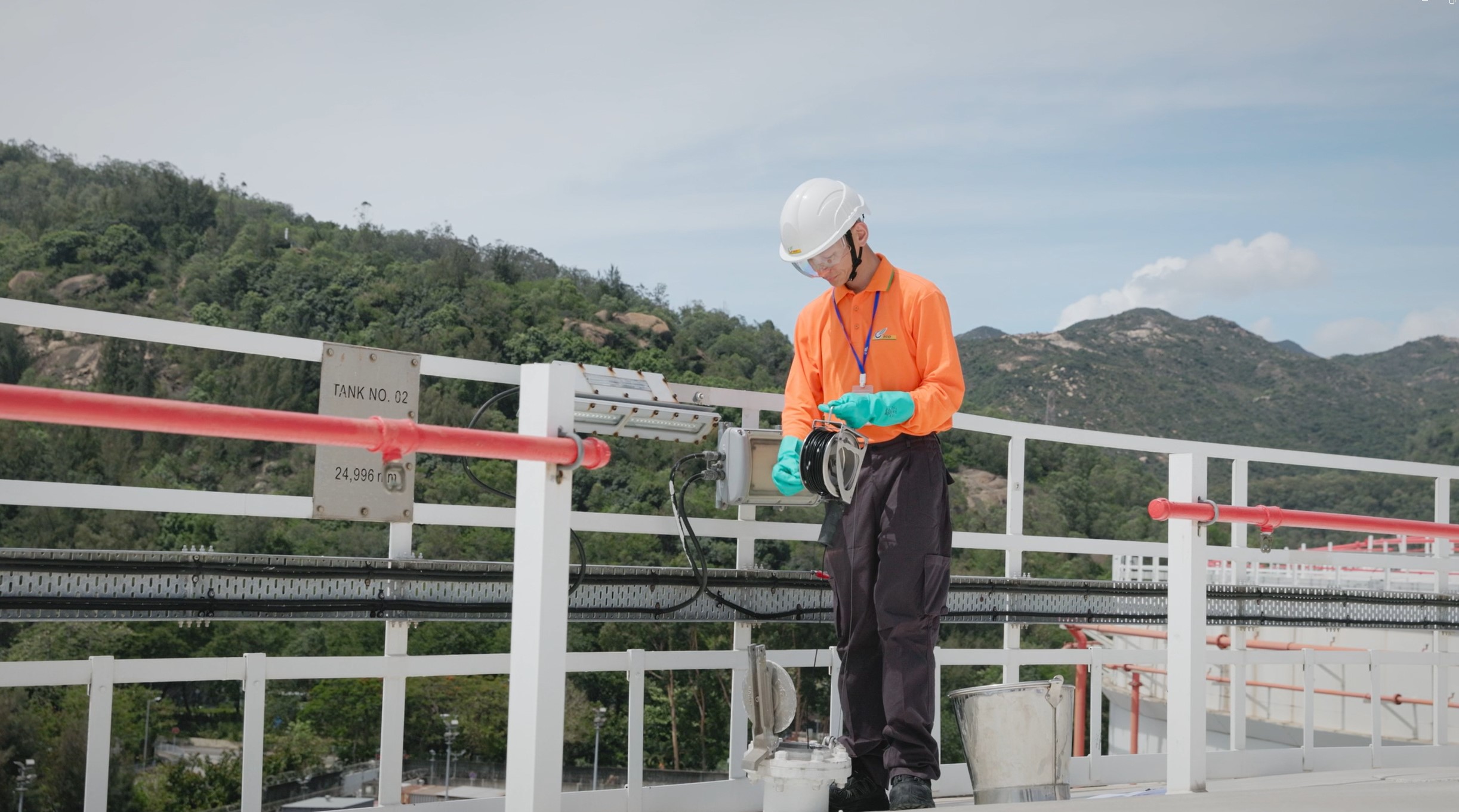
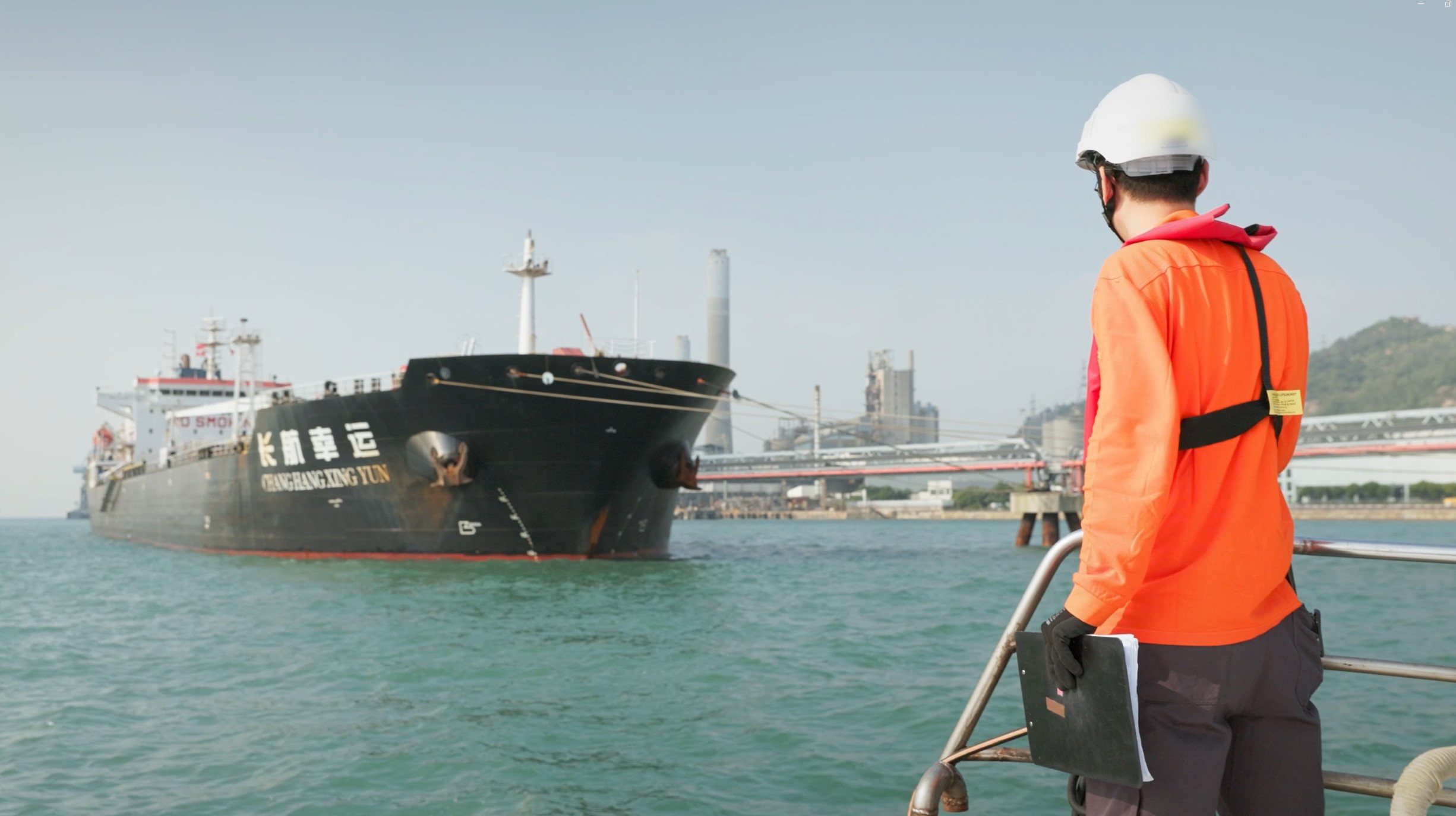
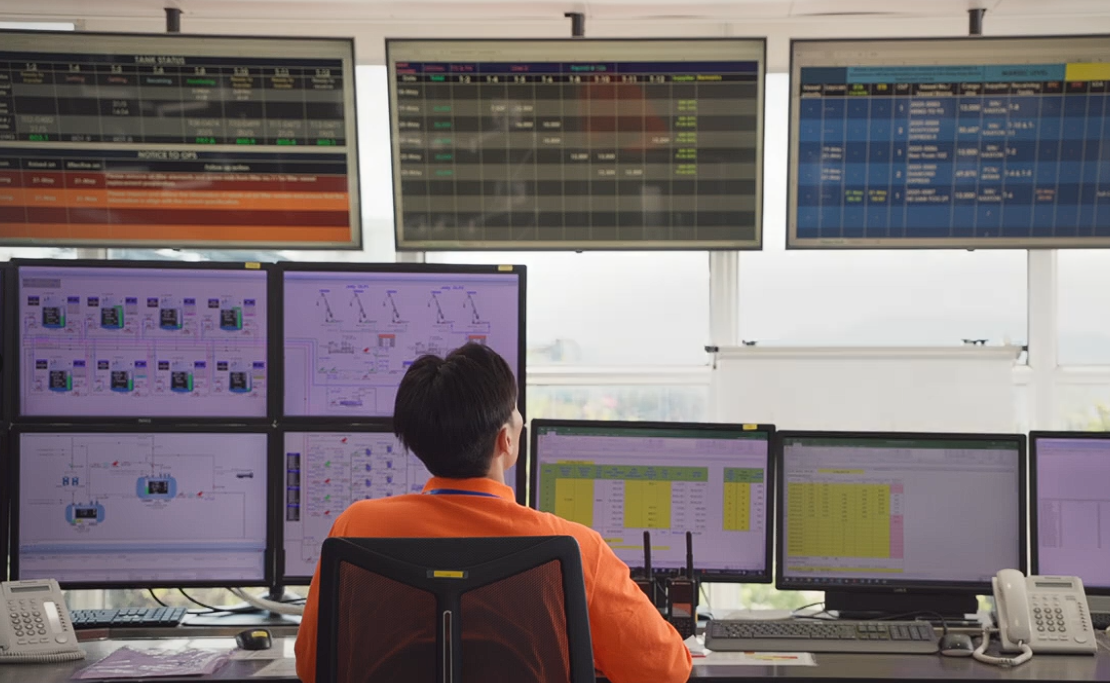
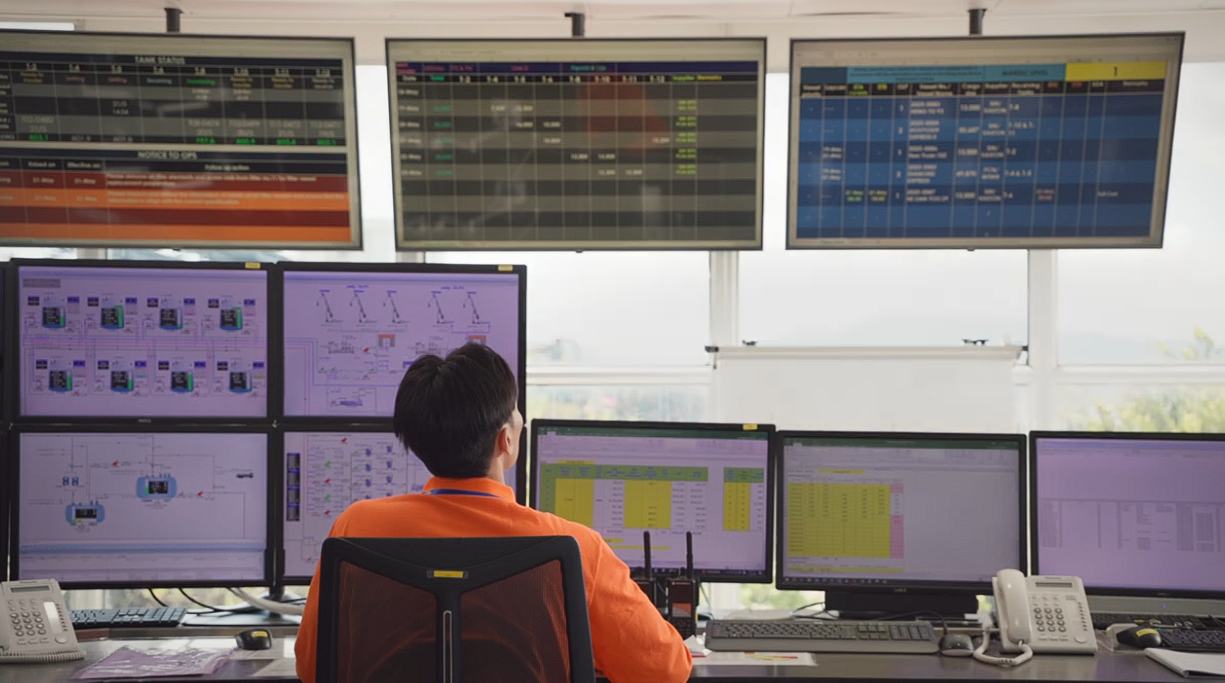
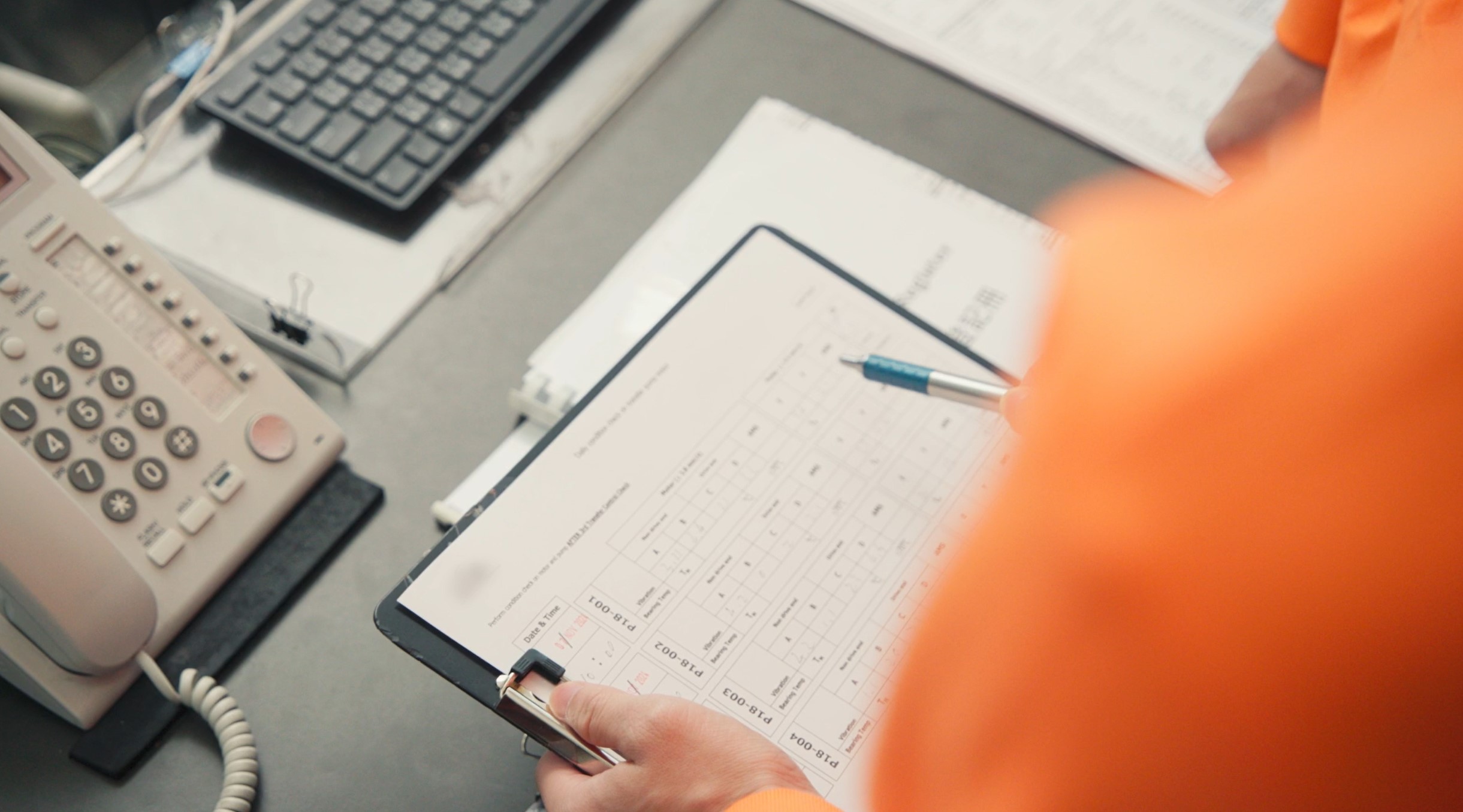
To ensure the fuel quality meets international standards, we perform thorough testing before allowing the fuel to be pumped into the airport’s fuel distribution system. Our team works around the clock to perform these quality control operations and fulfill our vital mission of providing reliable, high-quality fuel to support the operation of the HKIA.
Visual Appearance Check
A field check to confirm the acceptability of the fuel (i.e. free from particulate matter and undissolved water at ambient temperature)
Chemical Water Detection
A Chemical Water Detector test for Jet fuel indicates the presence of free water in the sample.
Certificate of Analysis (CoA) Test
This is a full conformity test carried out in accordance with the AFQRJOS Check List for Jet A-1 to verify that the quality of the aviation fuel concerned has not changed and remains within the specification limits.
Marine Receipt
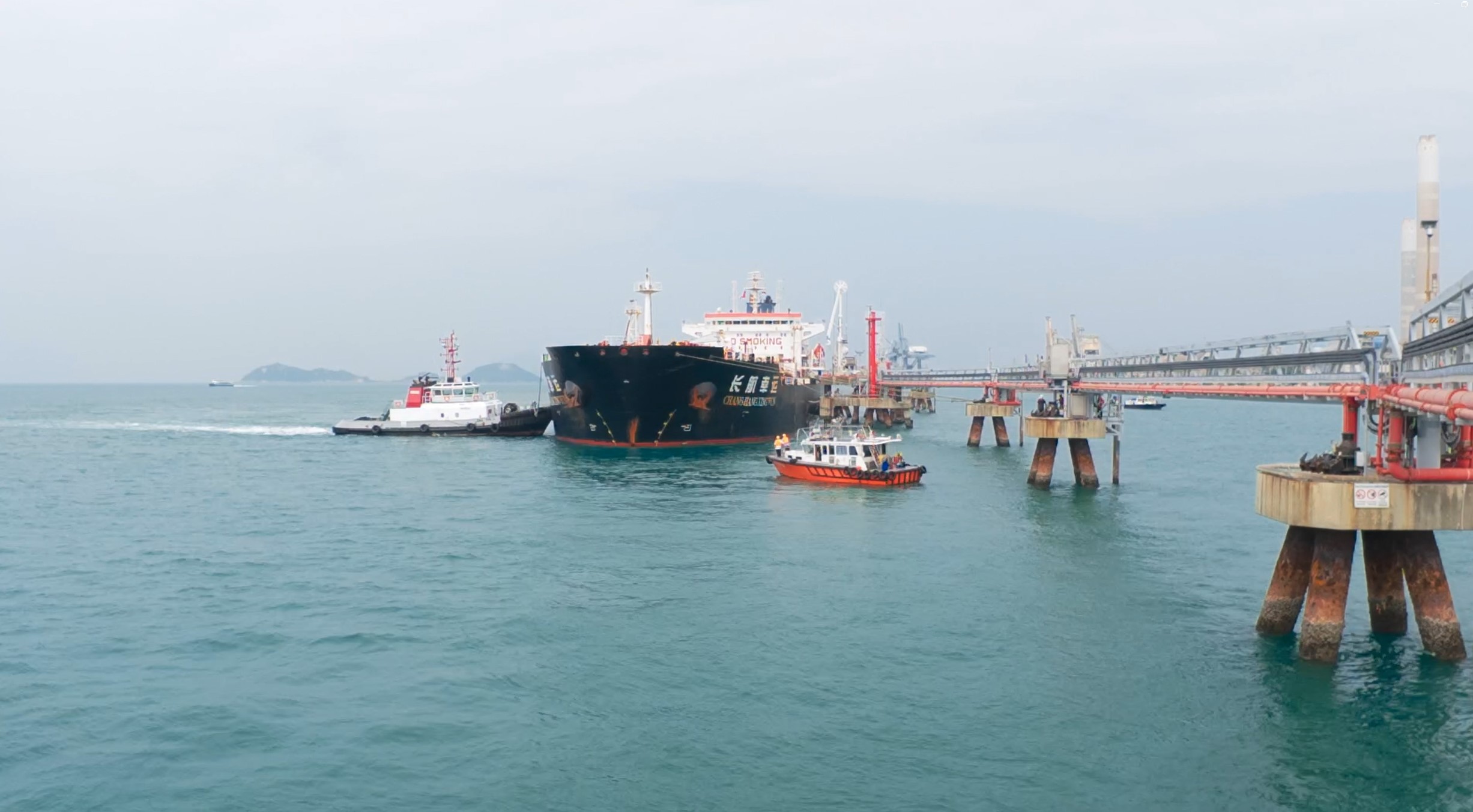
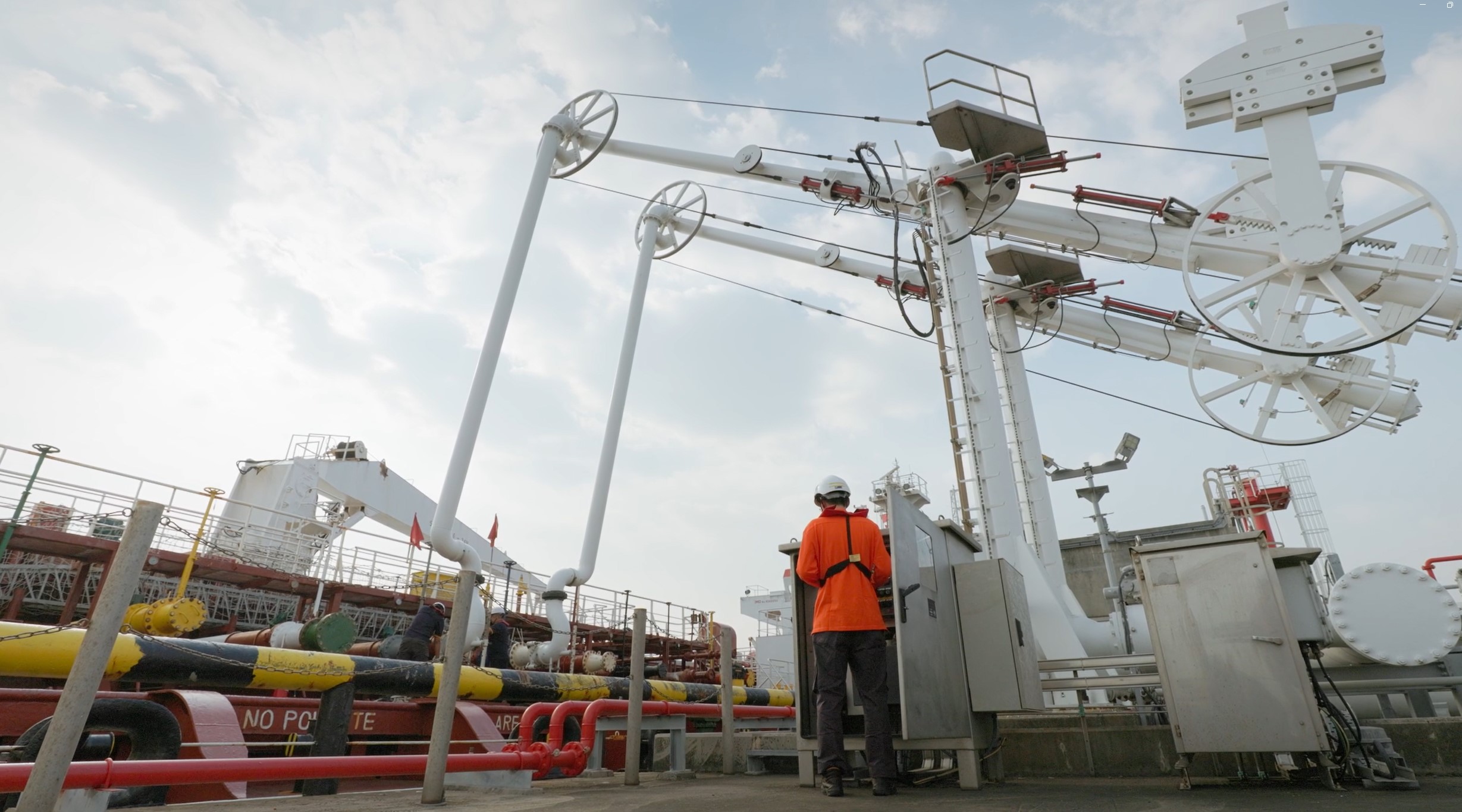
Marine receipt operations involve receiving and handling aviation fuel delivered by marine vessels at PAFF. The primary objective is to safely and accurately receive, verify, and document the incoming cargo. This includes inspecting the cargo for any contamination, verifying the quantity and quality of the fuel, and ensuring compliance with applicable regulations and standards.
Pre-Arrival
Prior to the vessel’s arrival, preparations are made to ensure a smooth reception. This includes coordinating with the pilot, vessel agents, confirmation of the cargo document, reports, permit and review the available ullage in PAFF.
Berthing
The procedure for berthing involves allocating a suitable berth for the vessel to dock and facilitating its safe arrival at PAFF designated OLP1 or OLP 2.
Vessels Vetting
This procedure involves assessing the suitable vessels for transporting aviation fuel based on predefined criteria, including the vessel’s safety record, compliance with regulations, and capability to handle the cargo and berth at PAFF.
Fuel Movement
Aviation fuel is used in substantial quantities daily. It is transported from refineries worldwide by ocean-going tankers, unloaded at the Permanent Aviation Fuel Facility, and then delivered to Hong Kong International Airport through pipelines. We prioritize the safe and timely supply of fuel, adhering to the highest international standards to ensure that every drop meets specifications for aircraft uplift.
Settling and Water Draining
Fuel should be settled for 24 hours to effectively remove dirt and water. After settling, water which is collected at the bottom of the tank shall be drained off on a daily basis and draining shall be conducted before release.
Fuel Transfer
To ensure that product quality is satisfactorily maintained after storage tanks are filled including Inter Tank Transfer and Product Recovery
Product shall not be released from storage for delivery unless the following requirements have been met :
Product has been settled and properly tested.
Results of RT, CoA, Visual Appearance Check (VAC) and Control Check are compliant with the specification limits.
Water and/or sediment collected in the tank sumps has been drained.
All required tests and checks have been completed and results recorded.
Fuel Storage
Our aim is to guarantee the satisfactory maintenance of product quality following the filling of storage tanks, encompassing Inter Tank Transfer and Product Recovery processes.
This site is registered on wpml.org as a development site. Switch to a production site key to remove this banner.